For our second artist interview of the 2026 Delaware Fun-A-Day season, we're featuring Catherine Hill, a lifelong fiber artist, bobbin lacemaker, and self-described "textilian." From working with as many as 180 bobbins at a time to teaching the next generation of lacemakers, Catherine offers a fascinating look into an art form that most people have never seen up close. In this interview, she shares what keeps her inspired after decades of making lace, why the craft is far from a "dying art," and how anyone can learn if they're willing to start with the basics. Thanks, Cathy!
We like to know how people are connected to Delaware - are you a resident, born and raised? What brought you to Delaware Fun-A-Day (DEFAD)?
I was born in Dover, Delaware, raised in Pennsylvania and returned to Delaware in 1989 as a freshman at the University of Delaware. I married my college sweetheart and have lived in Delaware ever since.
I first heard about Delaware Fun-a-Day when I started volunteering at the Newark Arts Alliance (NAA). The NAA was at that time (and still is) a drop-off point for artists to bring their work. I thought it sounded like an interesting challenge. It took me a few years to participate because the most time-consuming parts of lace are starting and ending. I eventually figured out I could do one project with 31 parts.
In 2025, your Delaware Fun-A-Day project was 31 Days of (Bobbin Lace) Spiders, a sampler exploring a specific bobbin lace element. For 2026, you've shifted gears with A Very Fashionable Snake, a piece that will feature 29 different Milanese braids connected into a single lace snake. What have you discovered about your craft by slowing down and studying a single technique in such detail?
That's actually not a valid question for me. I am a textilian. If you ask me, I would define myself as a sewist, a knitter and a bobbin lacemaker. But I have dipped my toe into so many other fiber arts. Even as a lacemaker, I have merrily sampled the various laces that came my way. I keep saying that I’m going to settle down to three or four different laces, but then I see something new, an opportunity to take a class comes along and I suddenly find myself with another pillow with a new lace under construction.
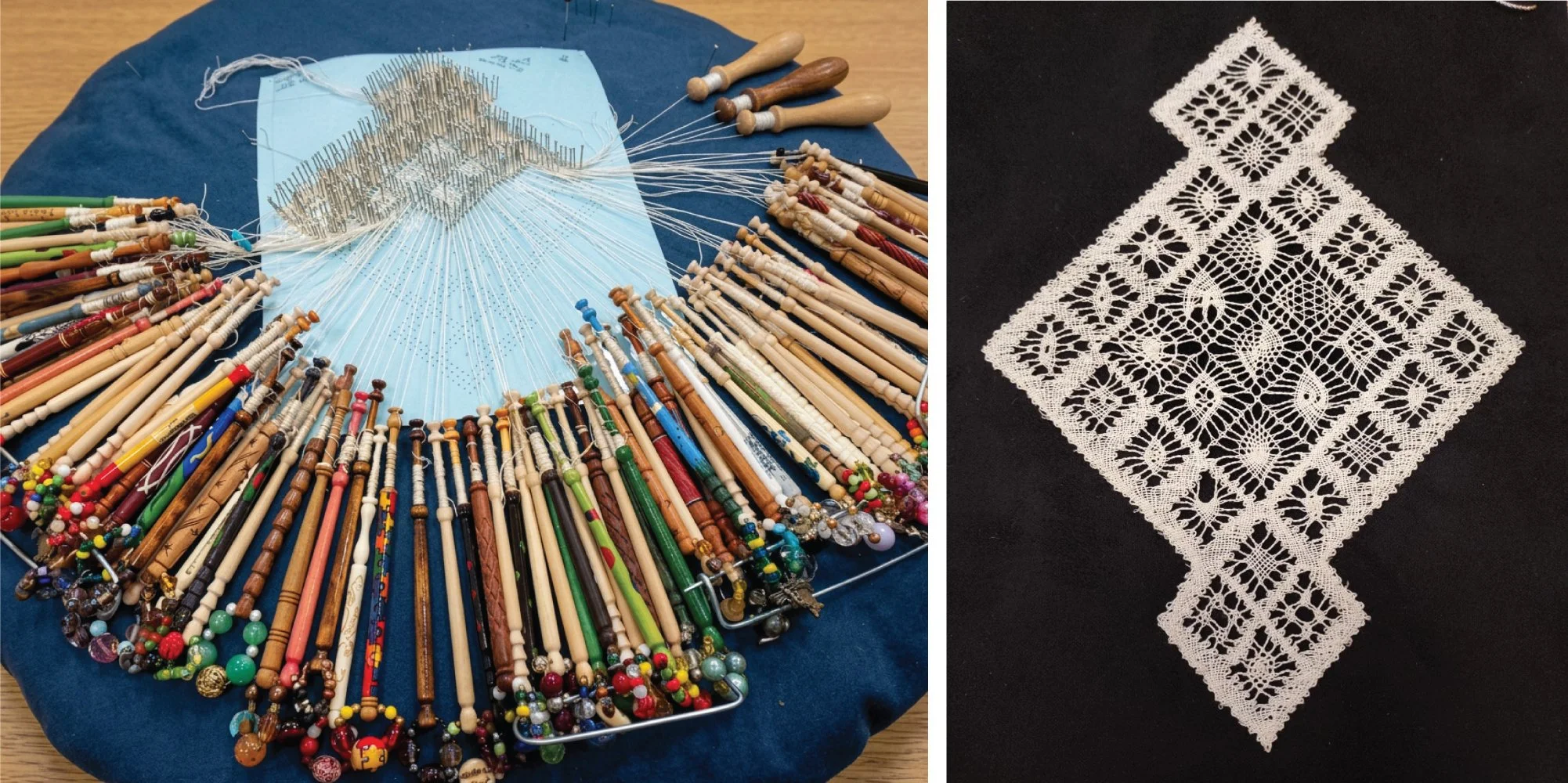
Most people have never seen bobbin lace being made in person, and many wouldn't believe the complexity involved. Indeed, I think most people don’t realize how lace is made at all. Looking at photos of your work, I've seen pieces involving well over 125 bobbins at a time. What is the largest number of bobbins you've ever used on a single project, and how do you keep track of that many moving parts without tying yourself into knots?
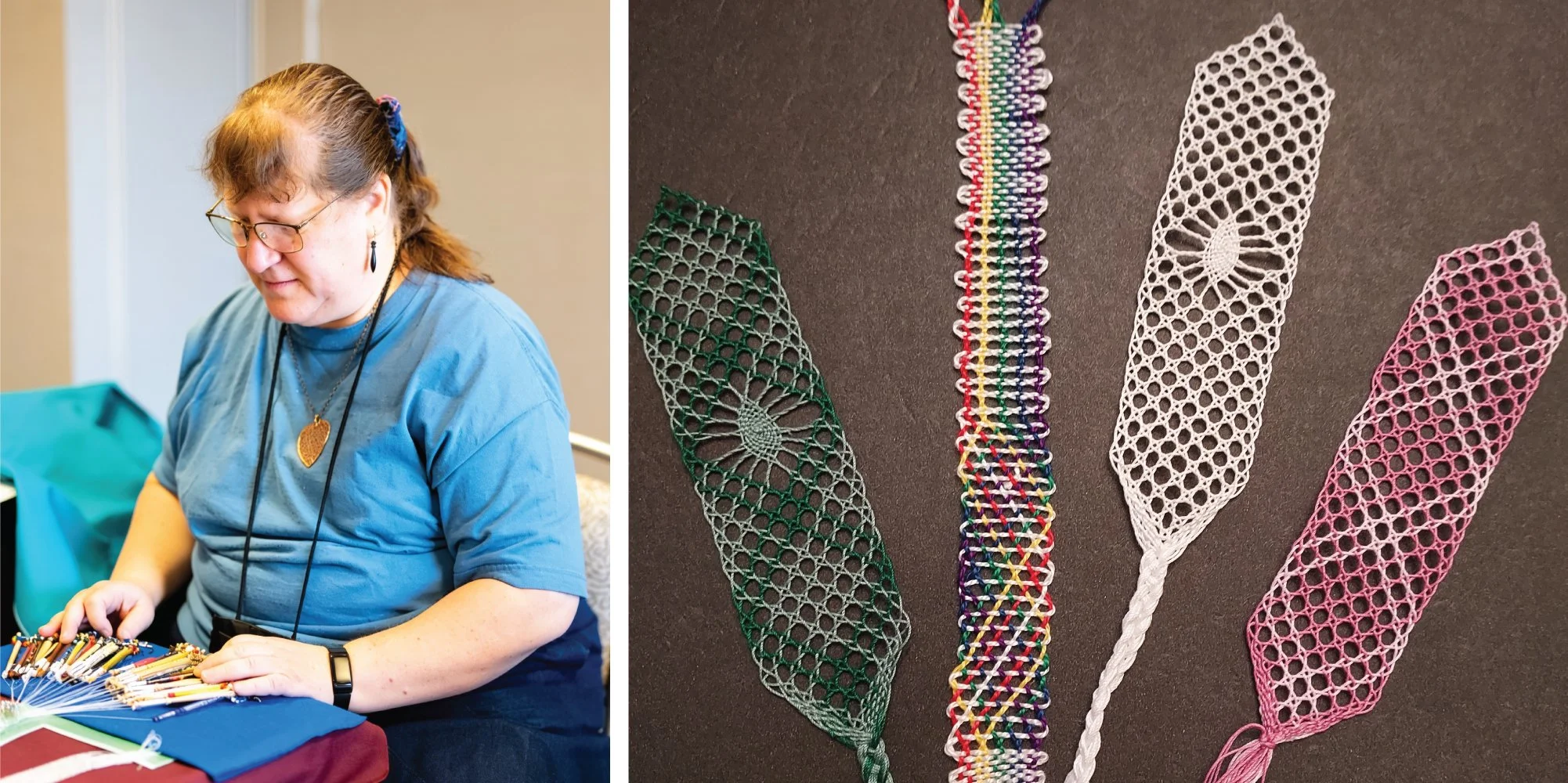
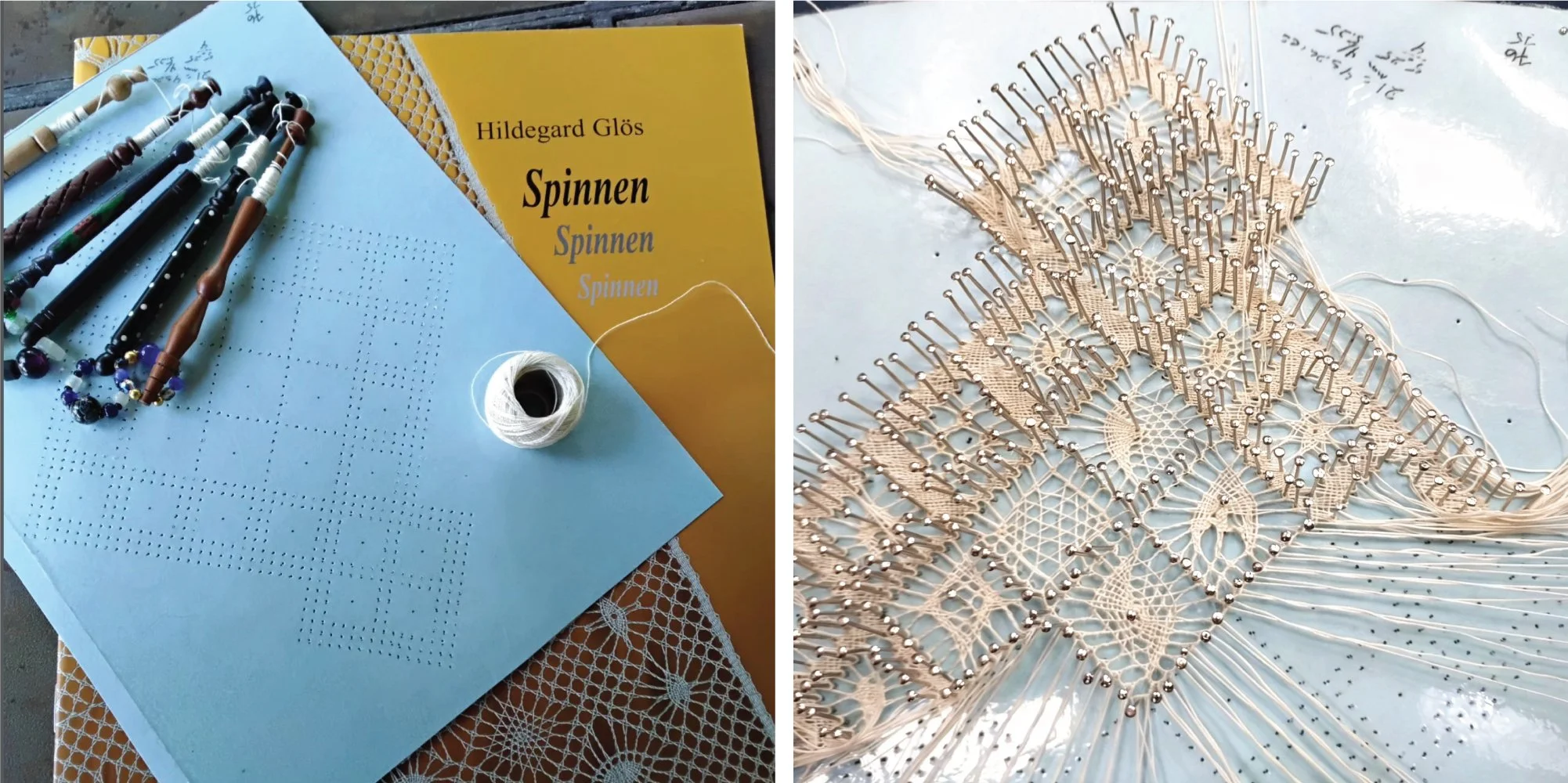
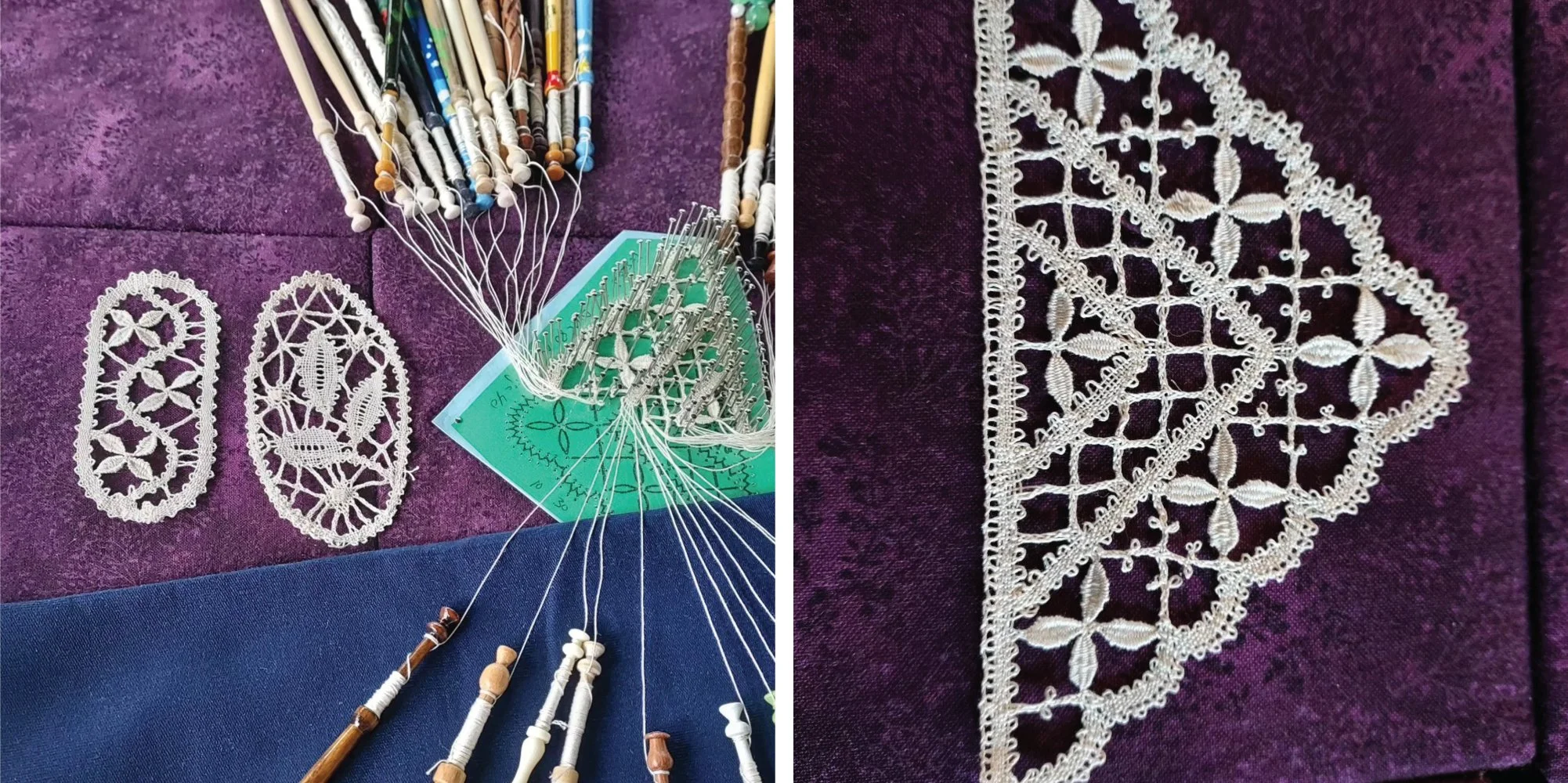
When I make lace I have a pattern pinned to my pillow. I often also have a picture of the lace and/or a thread diagram. Thread diagrams and pictures of the lace tell me what stitches I will be using as I make my lace. The pattern tells me where I will be placing pins. I place pins when threads cross or change directions. The pins give me something to pull against so I can tension my thread.
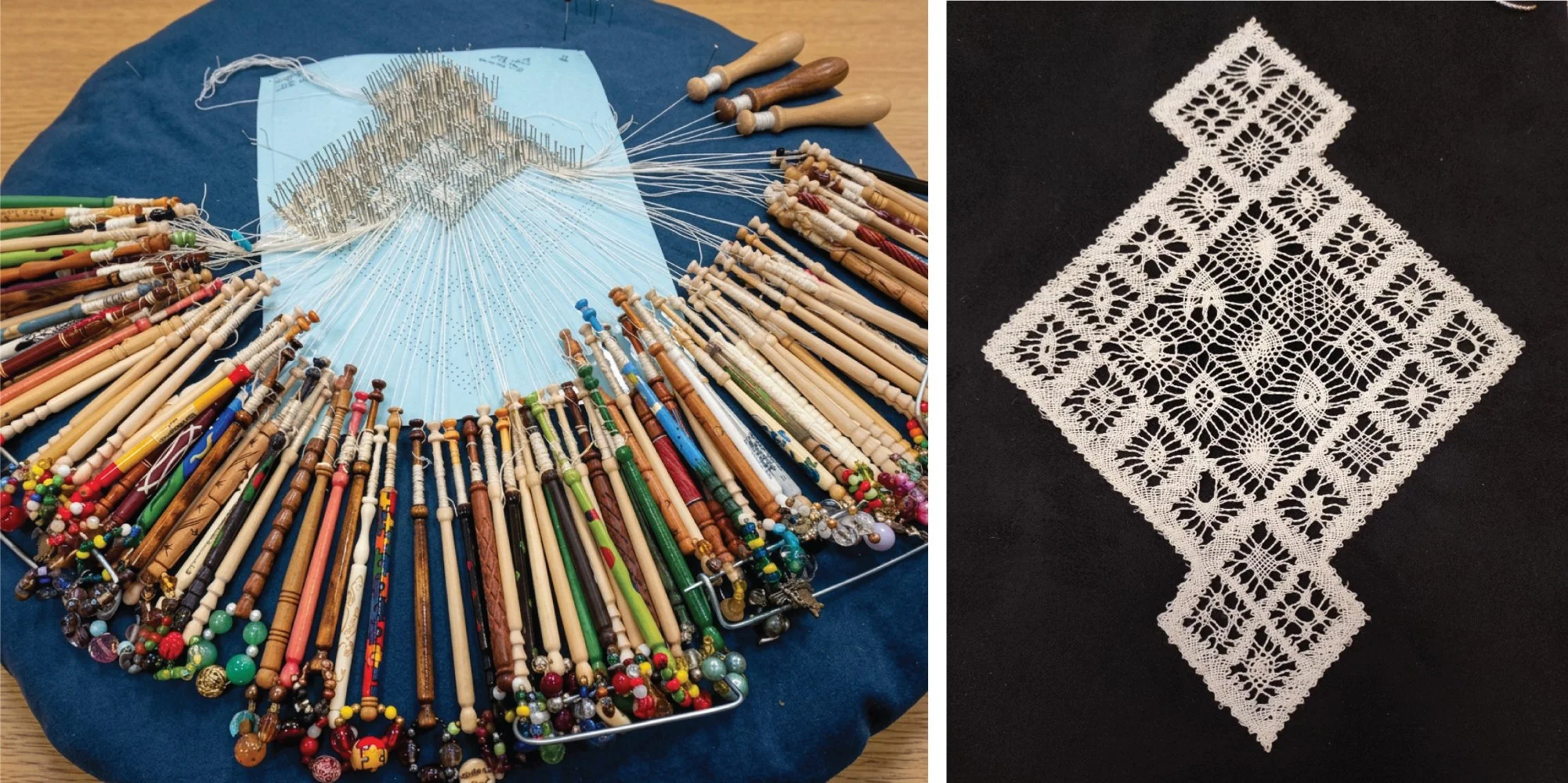
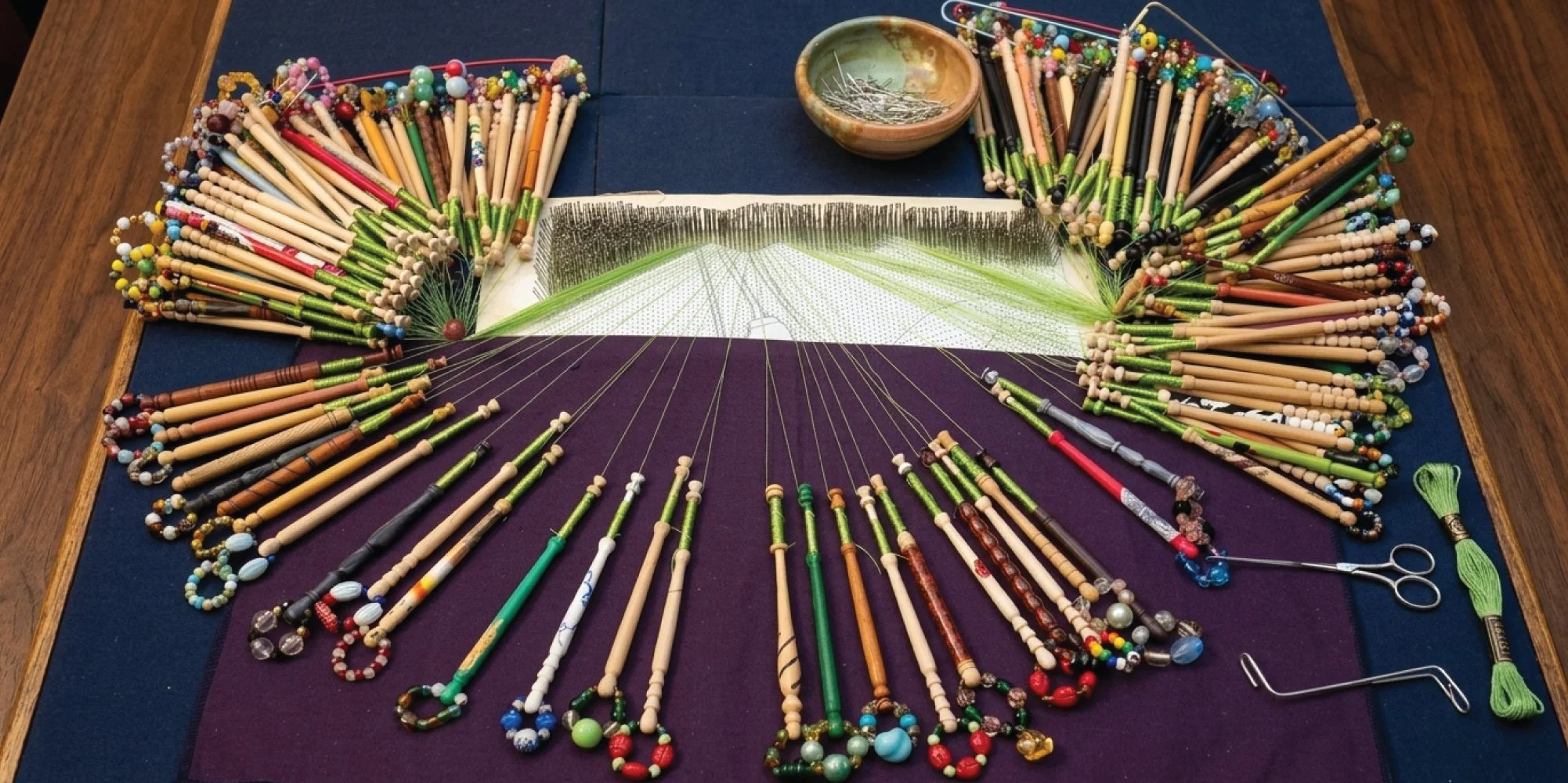
It doesn’t matter how many bobbins there are in the piece, you only use four at a time and you only have two moves, the cross and the twist. You can achieve different effects by varying how you combine those crosses and twists. At any given time I might have up to 2 dozen bobbins I am working with. I watch those threads to make sure they are going where they need to. The rest of the bobbins, especially when working larger pieces, will sit off to the side in their holders for long periods of time while I work on one area of the piece. The holders can take different forms, but their purpose is all the same, to keep bobbins in order when I am not working with them.
The most bobbins I’ve ever had on a pillow was probably 170-180.
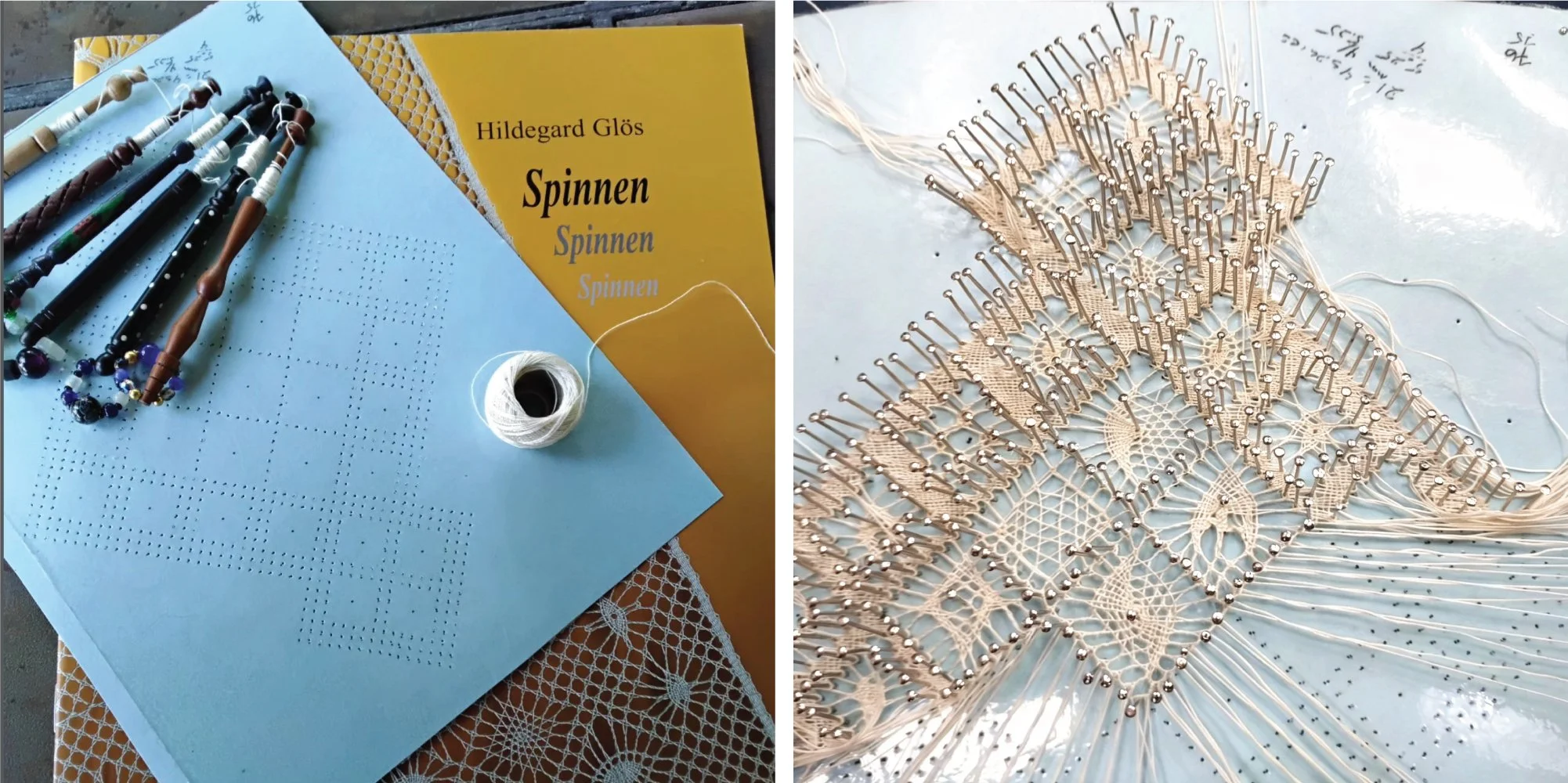
There is so much preparation that goes into a piece of bobbin lace. When you're creating an original design, where do you spend the majority of your time: designing the pattern, preparing the piece, or actually making the lace itself? Has that answer changed over the years?
Most of the time goes into the actual working of the lace, whether it’s my own design or someone else’s. I haven’t actually designed a lot of lace. Many lacemakers go their whole lives without doing so.
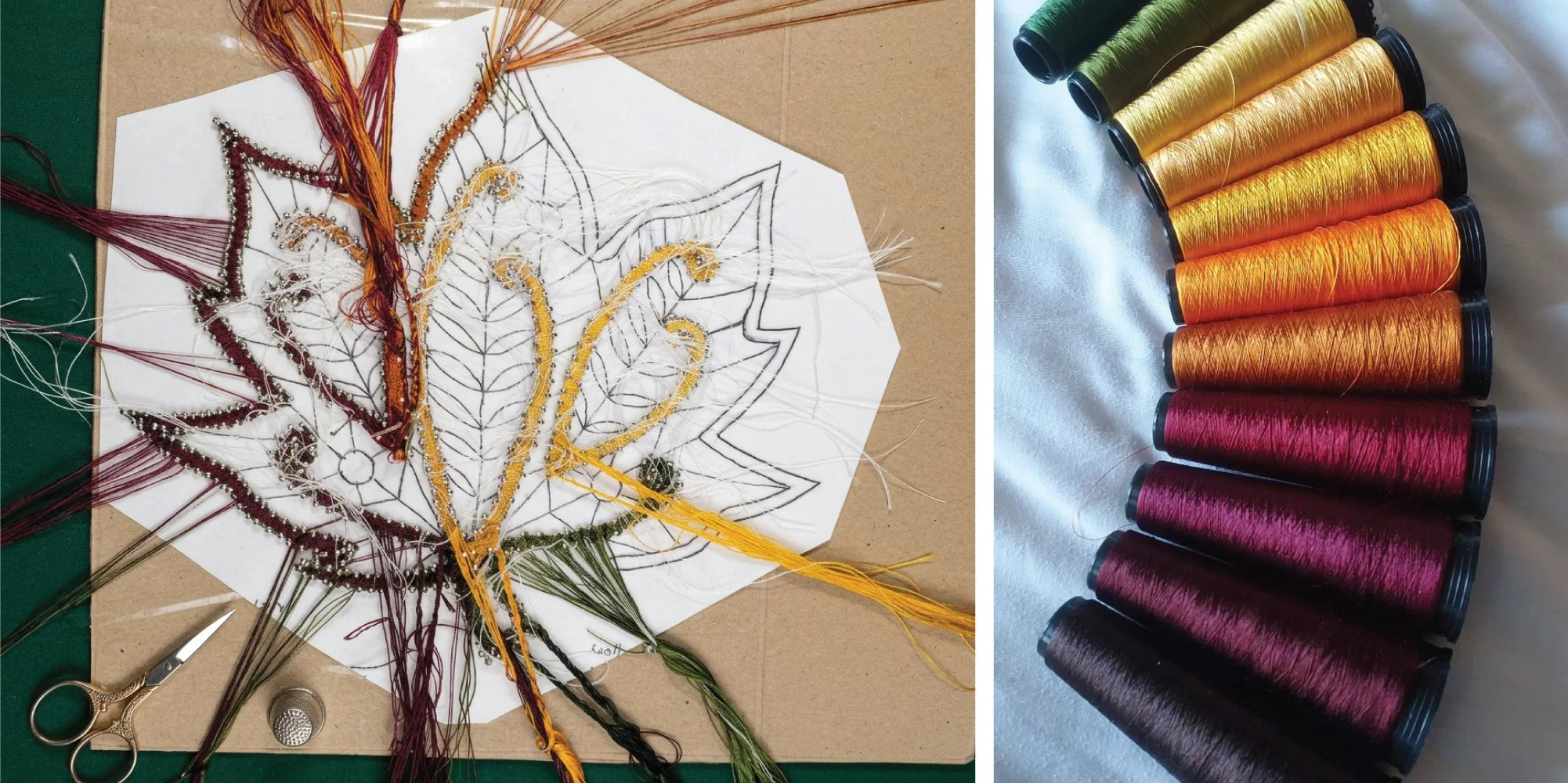
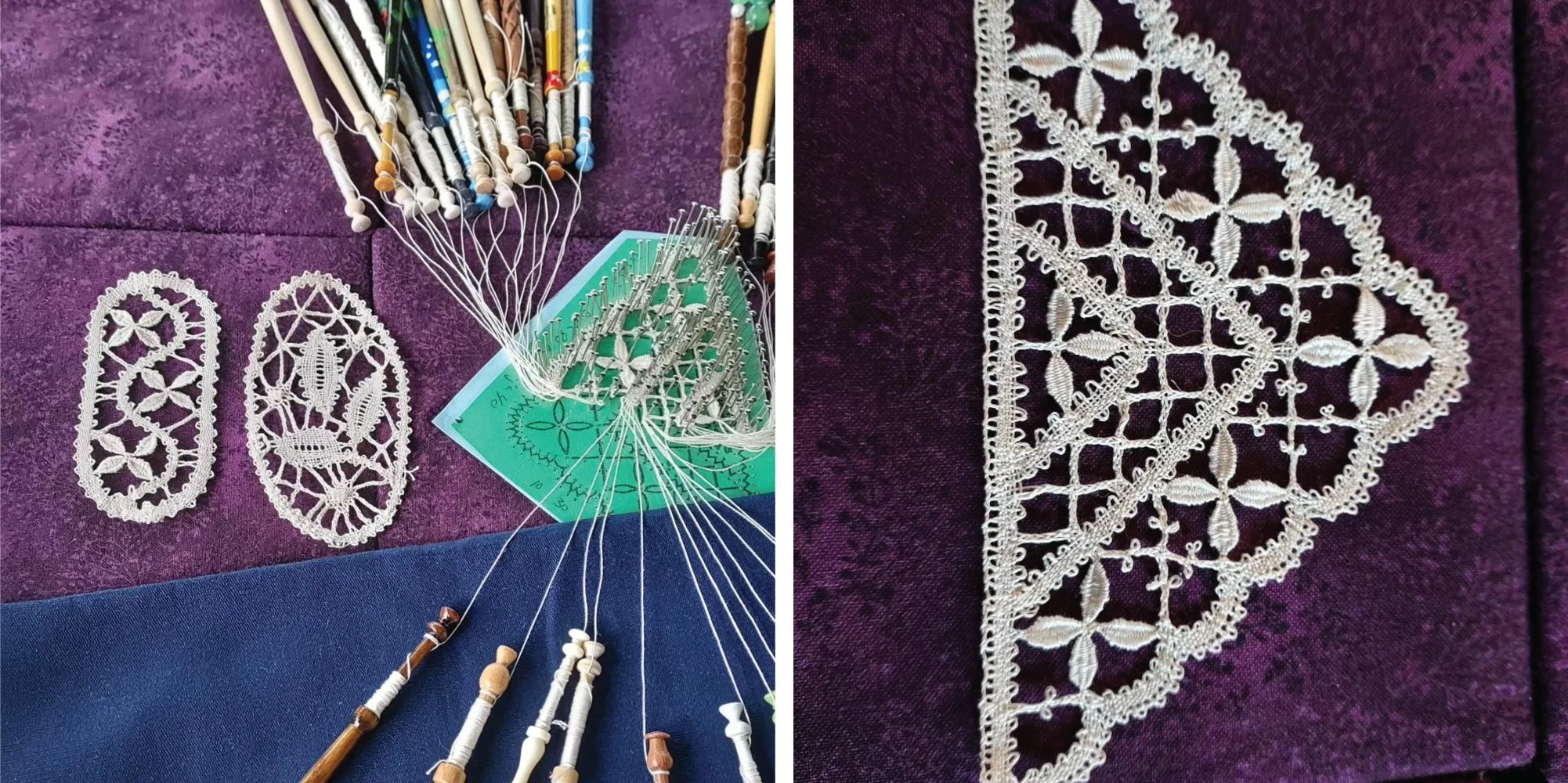
Some laces can be designed fairly quickly. My Fun-A-Day piece for this year is a tape lace. Tape laces are fairly easy to design and take relatively few bobbins. The other project I am currently working on is Chantilly lace - which involved drawing my design, creating a thread diagram that traced where all the threads go, and then, using that diagram, making my pattern. Having done all that, it still is taking more time to make the lace than to do the design.
Which part of the process do you find most creatively satisfying, and which part tends to be the most technically challenging?
Sometimes I make lace because it is creatively satisfying. Sometimes I make lace because it is very soothing and repetitive. Different laces can have different effects on a lacemaker.
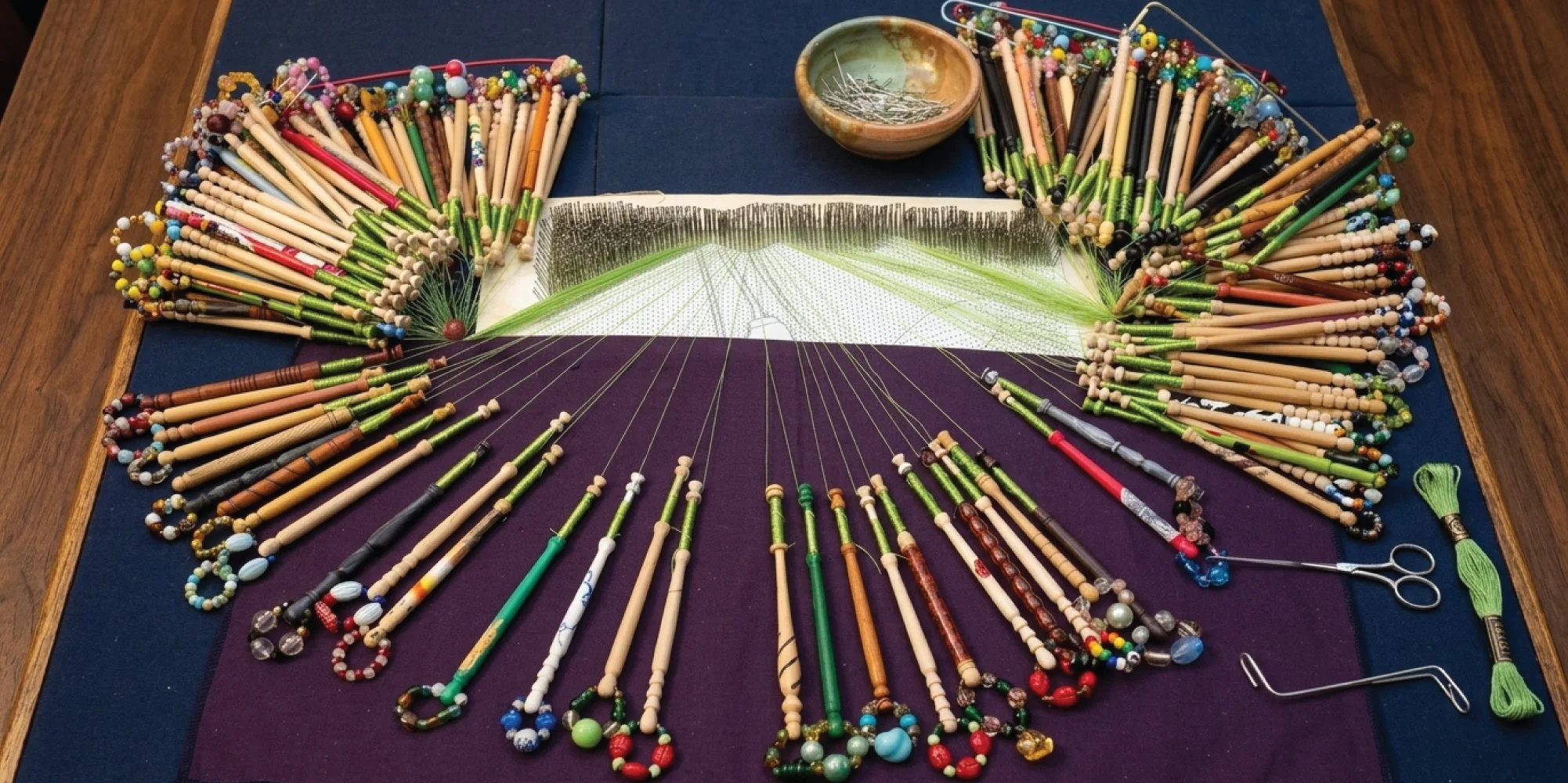
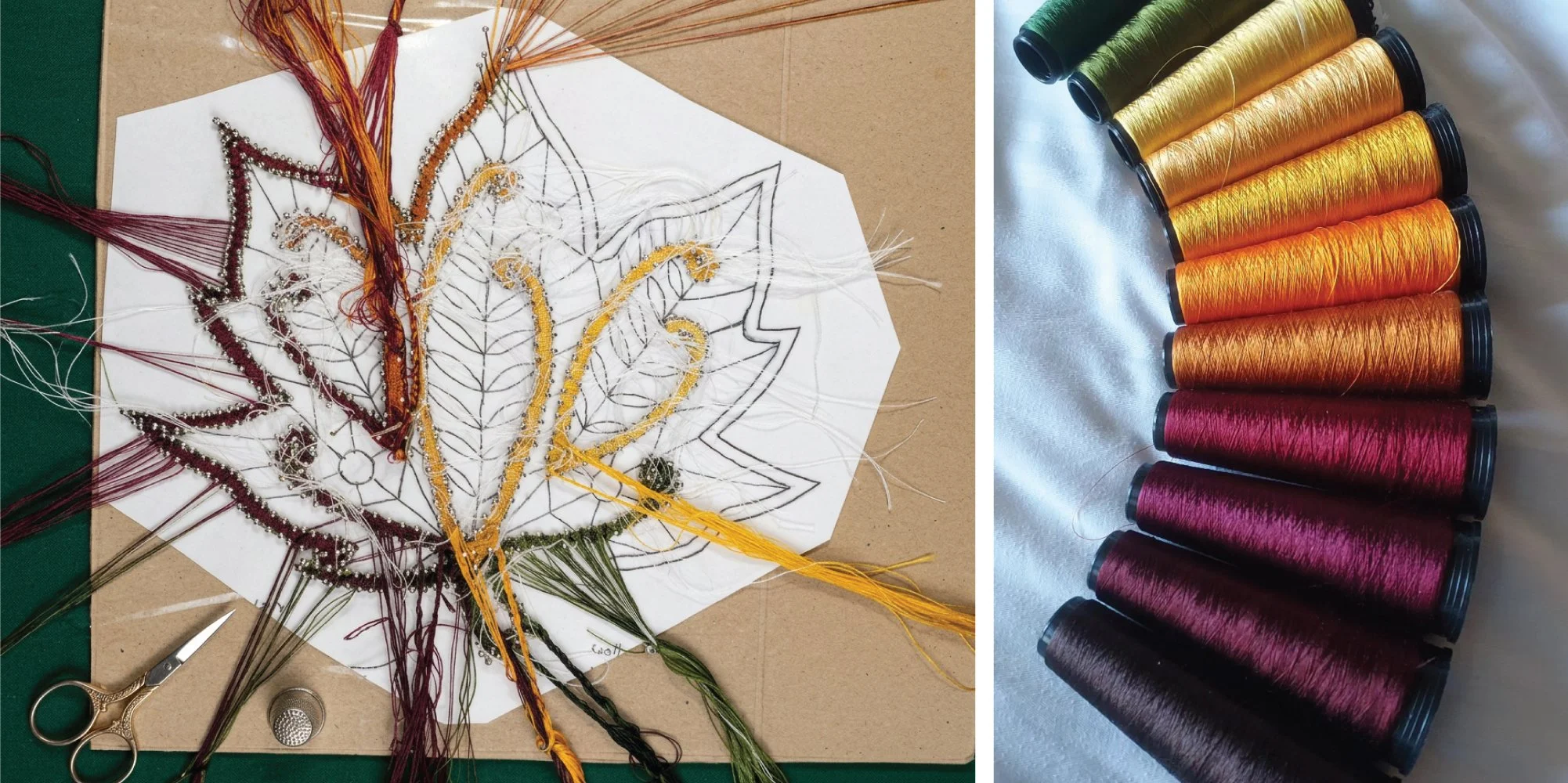
I have always loved the versatility of lacemaking. I can take a simple set of tools and thread and take it in so many different directions. It can be a simple pictorial Idrija piece that I can work on while I hang out with friends or a Chantilly piece so complex that I have to kick everyone out of the house so I can concentrate. I’ve used a variety of threads - cotton, silk, linen, wool, hemp, copper wire. One simple set of tools and I can go so many places.
I also love the challenge. Am I smart enough to do Flanders? (Only a little.) Can I take this beautiful silk thread and combine 12 colors of it into one piece? (Yes, but that project is currently on hiatus...again.) What happens if I try doing this wild thing...?
Can folks buy your patterns? If so, where? If not, where do you recommend folks look?
No. The patterns I’ve designed work for me because I designed them and know what was going through my head at the time. I’d have to rewrite and refine them to include the changes I made while I was working.
There are lots of patterns out there. Most of the ones I’ve worked come from books or the Internet. You can easily find bobbin lace suppliers online. And there are local (ish) lace groups where you can find help and support.
While researching your work, I came across a newspaper article from 2003 and was struck by the fact that bobbin lace has remained a constant in your life for more than two decades. Most people cycle through hobbies and interests, yet you've stayed committed to this art form for so long. What is it about bobbin lace that continues to capture your imagination after all these years?
See question 5. Also I’m a bit vain. Nothing boosts your ego like having someone walk up to you and say, “I could never do that!” (Which is totally untrue. It is not nearly as difficult as people think it is.)
In that same article, you spoke about the importance of passing bobbin lace on to future generations. Looking back from 2026, have you seen interest in the craft grow, shrink, or simply change? What gives you hope for the future of bobbin lace?
I think the craft is growing. It’s definitely evolving. I started making lace before the Internet was a thing. My mother (who taught me) found her first teacher because of an ad in the Yellow Pages. Then came email lists and websites. It became easier for lacemakers to find each other and share their experiences. When COVID hit, the Lace Museum in Fremont, CA figured out how to teach classes over Zoom. I follow a number of lacemakers, lace groups and lace sellers on Instagram and Facebook. And lacemakers are still creating new patterns, new ways of designing and even new laces.
When I demonstrate, people often say to me, “Oh, that’s a dying art!” And I always say no. It’s evolving and growing. And as long as that continues to happen, it won’t be a dying art.
In addition to being a lacemaker, you currently serve as the Administrative Assistant for the Newark Arts Alliance wherein you also periodically teach bobbin lace. What advice would you give someone who is curious about learning bobbin lace but feels intimidated by the complexity of it?
Learning bobbin lace is like learning anything else; we build it up in steps. When I start you off, I give you 12 bobbins and you work with them on one thing, until your hands know what to do and your eyes know what to look for. When you’re comfortable with that first thing, we teach you a second thing and you work on that for a while. Eventually we’ll take two things and show you how to put them together. When you learn to read, you don’t start with the word "delicatessen," you start with “cat” and work your way up. The same thing happens with learning lace.
I will also say that the learning curve can feel steep, but I think that’s because it’s something people are not used to seeing. Everyone knows someone who knits or crochets. Even if they don’t know the specifics, they have seen the tools and the movements. They know someone who does it. Bobbins aren’t as familiar.
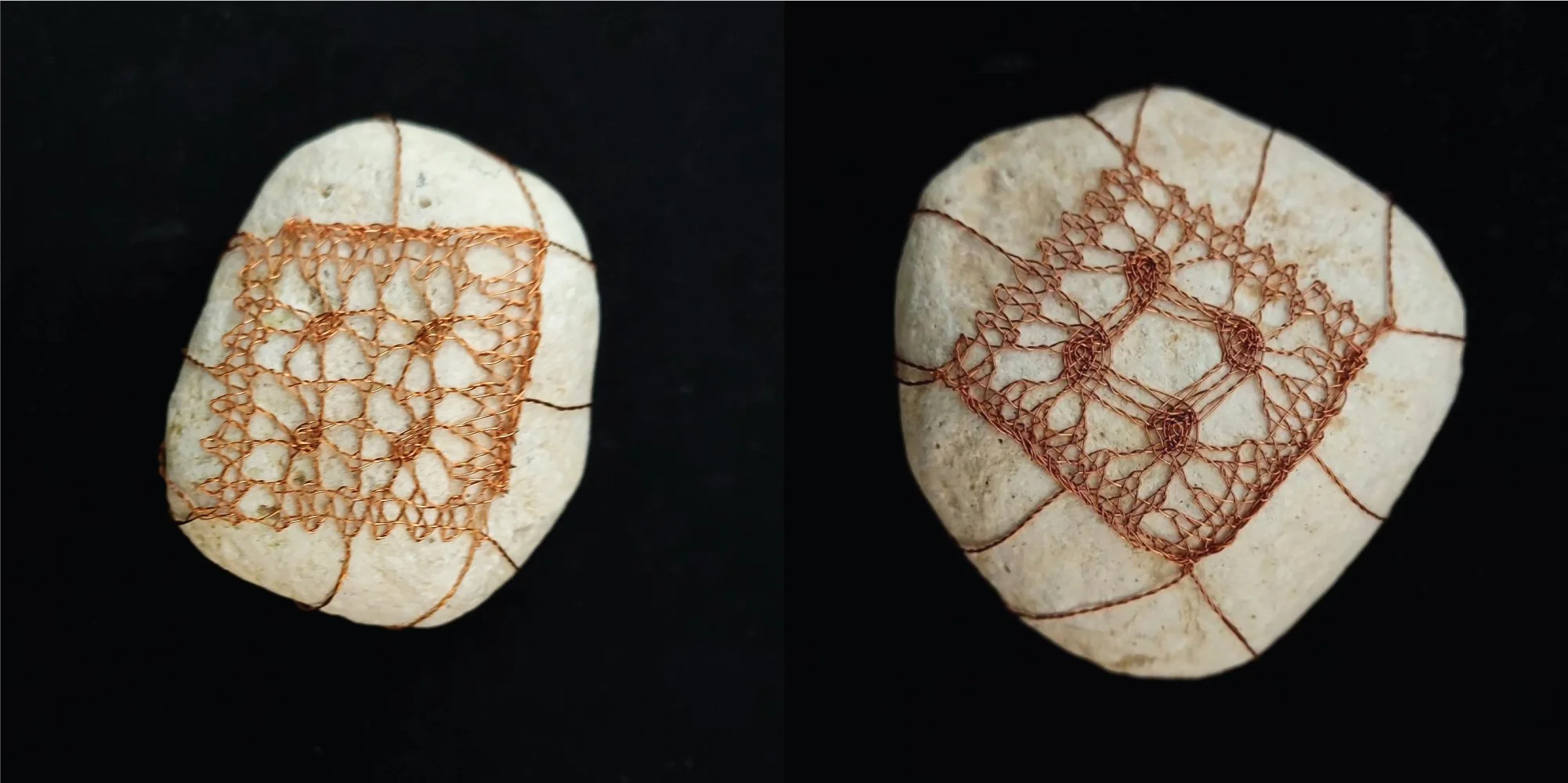
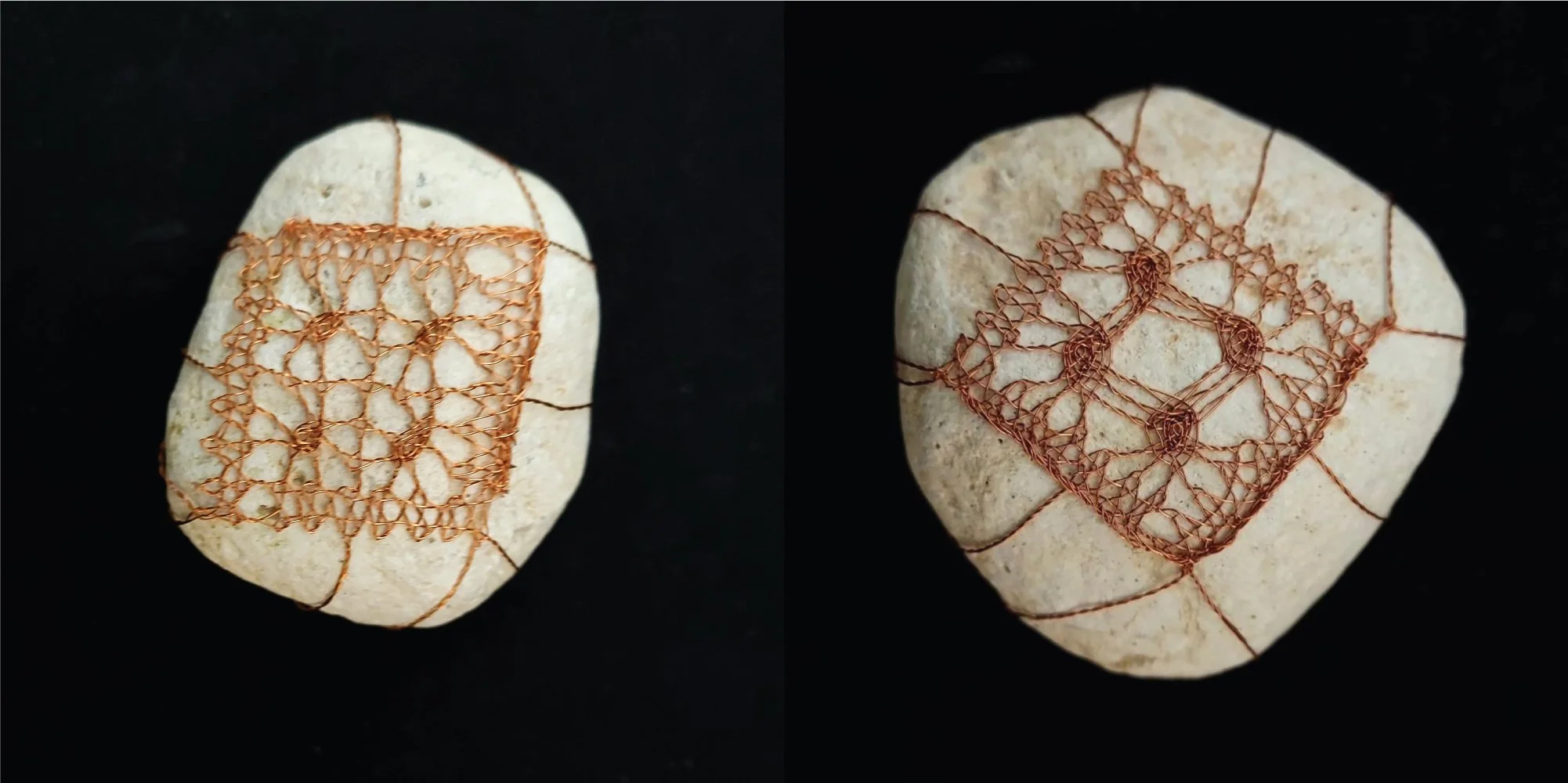
I love that while you're deeply rooted in a traditional art form, you're not afraid to experiment. When the Newark Arts Alliance asked artists to create painted rocks, you responded by incorporating lace-inspired metalwork using copper wire instead. How important is experimentation in your creative practice, and what have some of your more unexpected projects taught you?
I started playing with copper wire because I wanted to make jewelry. I hate the process of stiffening textiles and working with wire saved me that step. I don’t actually know that I consider myself experimental. People have been making lace with alternate materials for a long time. I’ve used their knowledge to adapt others’ patterns or create my own designs based on what I want those items to achieve.
Every artist develops strong opinions about their tools and materials over time. Are there particular threads, flosses, bobbins, books, or other resources that you consider indispensable? What would you recommend to someone assembling their first lacemaking toolkit?
If you want to make lace, talk to a lacemaker before buying supplies. They can tell you what it’s worth spending your money on and where you can save. You can spend a lot of money to start making lace, but you don’t have to.
When I teach, part of the fee is a kit because I want my students to have something that is functional but not massively expensive. I also tell them at the end of the class, “If you hate this and never want to do it again, I will buy back the kit. I will also buy back your kit if you decide that you love this and want to start investing in really good stuff.”
Lastly, bobbin lace seems fundamentally different from many other fiber arts because it requires constant visual attention. A knitter can often glance away from their work, but lacemaking appears to demand complete focus on the threads, pins, and pattern. When you're working on a large piece for hours at a time, what helps you settle into that creative zone? Are you listening to audiobooks, podcasts, or music? If so, drop us your recommendations!
Once you know what you’re doing, it doesn’t take complete focus. As I mentioned above, there are laces that I do with friends or while demonstrating. Those are laces that I’ve made for a long time, that I know how they go together and what cues I need to look for to figure out what I was doing or where to go next.
I’ll listen to most anything while making lace. I tend to favor Golden Age Mysteries (Agatha Christie, Rex Stout, Ngaio Marsh) and podcasts (“Wait Wait… Don’t Tell Me,” “No Such Thing as a Fish,” “Gastropod”).
Anything else you’d like to share or enlighten us with? Where can people buy your artwork and how can they connect with you?
They can’t buy my work. I make lace for the love of making lace. They can see my work at @bobbinchick on Instagram. And if folks think that lace is just doilies, they should check out the work of Pierre Fouché, Lauren Sundin, Ulrike Voelcker, Jane Atkinson… this is not your grandmother’s lace.